
78 Main St A, Netcong, NJ 07857

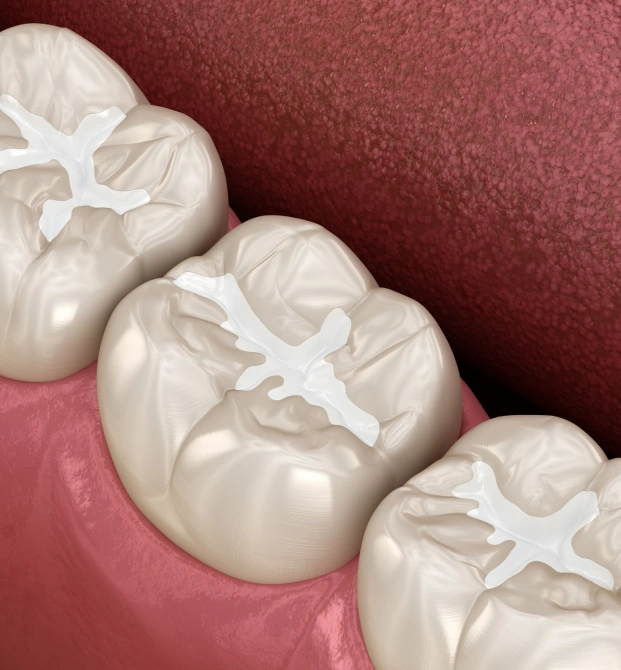
A Simple Barrier Against One of the Most Common Places Cavities Start
Most cavities do not form on the smooth, visible surfaces of your teeth. They form in the deep grooves and pits of your molars, where food particles and bacteria settle in and toothbrush bristles struggle to fully clean. Dental sealants are a thin, protective coating applied directly to these chewing surfaces, sealing off the grooves before decay has a chance to start.
At Gibney Dental Associates in Netcong, NJ, dental sealants are one of the simplest, most cost-effective ways to prevent cavities, particularly on molars and premolars, the teeth most prone to decay due to their uneven surfaces. The procedure is quick, completely painless, and requires no drilling or anesthesia, making it an easy addition to a routine preventive visit.
Procedure Time: 15–30 minutes
Why Sealants Are Worth Considering for Cavity Prevention
- Creates a smooth, protective barrier over deep grooves in molars where cavities most often start
- Reduces the risk of decay by blocking out food particles and bacteria that regular brushing cannot fully remove
- Quick to apply, typically completed in a single visit with no drilling or numbing required
- Cost-effective compared to the price of treating a cavity once it has formed
- Long lasting, often protecting teeth for several years with proper care
- Suitable for both children with newly erupted permanent molars and adults with cavity-prone teeth
Who Benefits Most From Dental Sealants
Sealants are most commonly recommended for:
- Children and teens, shortly after their permanent molars come in, when the deep grooves are most vulnerable and still cavity-free
- Adults with deep pits and fissures in their molars who have a history of cavities in those areas
- Patients who struggle to thoroughly clean their back teeth despite consistent brushing habits
- Anyone looking for an additional layer of cavity prevention alongside routine cleanings and fluoride treatment
A dental exam is the best way to determine whether your molars have grooves deep enough to benefit from sealant protection.

From Exam to Protected Tooth: The Sealant Process
Applying a dental sealant is a straightforward process that fits easily into a single dental visit.
01.
Exam and Diagnosis
Our dentist examines your teeth and takes X-rays if needed. If decay is present, we determine whether a dental sealant procedure can help prevent cavities from forming or worsening in that area.
02.
Cleaning and Preparation
For dental sealants, we clean and thoroughly dry the teeth before applying the protective coating, ensuring the sealant bonds properly to the tooth surface.
03.
Applying the Sealant
A thin layer of protective material is brushed onto the chewing surfaces of the molars and cured with a special light for durability, hardening it into place.
04.
Final Adjustments and Protection
The sealant bonds to the tooth, creating a smooth surface that repels bacteria and food particles, closing off the grooves where cavities most commonly begin.
Caring for Your Sealants After Treatment
Once sealants are in place, very little changes about your daily routine, which is part of what makes them such a low-maintenance form of cavity prevention. You can eat, brush, and floss normally right after treatment, since the material is fully cured and bonded to the tooth before you leave the office.
That said, a few habits help sealants last as long as possible. Avoid chewing on excessively hard items like ice or pen caps, which can chip a sealant over time the same way it might chip natural enamel. Continue brushing twice a day and flossing daily, since sealants protect the chewing surfaces of molars specifically, not the spaces between teeth or the gumline. At your regular checkups, your dentist will check the condition of your sealants and let you know if any touch-ups are needed, so there is no separate maintenance schedule to keep track of on your own.
How Long Do Dental Sealants Actually Last?
With normal wear, dental sealants typically hold up for several years before they may need to be reapplied. They are checked at routine dental visits, so if a sealant starts to wear down or chip, it can usually be caught and touched up before the underlying tooth is left unprotected. This makes sealants a low-maintenance form of cavity prevention that works quietly in the background between visits.
Give Your Molars an Extra Layer of Protection
Whether it is for a child's newly erupted molars or your own cavity-prone back teeth, sealants are a quick, painless way to reduce the risk of decay. Ask about dental sealants at your next visit to Gibney Dental Associates.