
78 Main St A, Netcong, NJ 07857

Prepare for Dental Implants with Bone Grafting
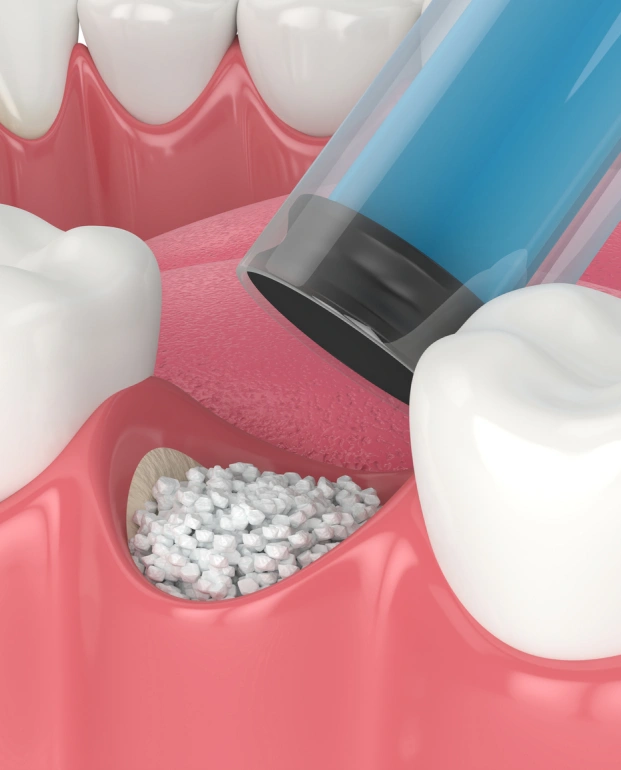
Bone grafting is a procedure that rebuilds or reinforces areas of the jawbone that have lost density, most commonly due to a missing tooth, gum disease, or an old extraction site that was never restored. During the procedure, grafting material is placed in the affected area to encourage new bone growth, creating a stronger, more stable foundation for future dental work, particularly dental implants.
At Gibney Dental Associates in Netcong, NJ, bone grafting is most often recommended as a preparatory step before implant placement, since implants require a certain amount of healthy bone to properly integrate and support a new tooth long term. Without adequate bone, an implant may not have the stability it needs to succeed, which is why grafting plays such an important role for many patients pursuing implant treatment.
Procedure Duration: 1 to 2 visits

Sedation Options: Local anesthesia, laughing gas (nitrous oxide), anti-anxiety medication
Why Bone Grafting Matters More Than Patients Expect
- Rebuilds bone density lost after tooth extraction, injury, or long-term tooth loss
- Creates a stable foundation needed for successful dental implant placement
- Helps preserve the natural shape of your jaw and face, which can change as bone deteriorates
- Prevents further bone loss in areas affected by gum disease or missing teeth
- Improves the long-term success rate of implants placed in previously weakened areas
- Can be performed at the same time as an extraction to preserve the socket for future treatment
Who Is a Candidate for Bone Grafting?
Bone grafting may be recommended if you:
- Are planning to get a dental implant but do not currently have enough bone density to support it
- Have experienced bone loss following a tooth extraction that was never restored
- Have gum disease that has affected the bone supporting your teeth
- Are having a tooth extracted and want to preserve the socket for a future implant
- Have a naturally thin or narrow jawbone in the area where a tooth is missing
A dental exam, along with imaging of your jawbone, is the most reliable way to determine whether bone grafting is necessary before moving forward with implant treatment.

From Evaluation to a Stronger Foundation
Bone grafting follows a clear process, with healing time built in before further treatment can proceed.
01.
Evaluation and Imaging
We assess your jawbone using imaging to determine the extent of bone loss and whether grafting is needed to support future treatment, particularly a dental implant.
02.
Placement of Grafting Material
Under local anesthesia, grafting material is placed in the affected area of the jawbone, either at the time of an extraction or as a standalone procedure for an area with existing bone loss.
03.
Healing and New Bone Growth
Over the following months, the grafting material integrates with your existing bone, encouraging new, healthy bone to form in the treated area.
04.
Moving Forward With Implant Placement
Once healing is complete and sufficient bone density has developed, we reassess the area to confirm it is ready to support a dental implant.
Recovering After Bone Grafting
Mild swelling, soreness, and minor bruising are common in the days following a bone graft, similar to recovery after a tooth extraction. Most patients return to normal daily activities within a day or two, while sticking to softer foods and avoiding pressure on the treated area for the first week or so. Following your post-op instructions closely, and avoiding smoking during healing, gives the graft material the best chance to integrate successfully with your existing bone.
Insurance, Financing, and Membership Options for Bone Grafting
Dental insurance coverage for bone grafting varies by plan, and coverage often depends on whether the procedure is considered necessary to support a future implant or to address bone loss from gum disease. Our team verifies your specific benefits before treatment so you understand your expected cost. We also offer financing through Cherry and CareCredit for patients who prefer to spread the cost of treatment over time, and our in-house membership plan includes discounted pricing on select treatments that may apply throughout your bone grafting and implant process.
Building the Right Foundation for Your Future Smile
If you are considering a dental implant but are not sure whether you have enough bone to support it, bone grafting may be the step that makes long-term implant success possible. Schedule a consultation at Gibney Dental Associates to find out if bone grafting is right for you.